





SKELDAR V-200
Product descripton: SKELDAR V-200 by UMS SKELDAR
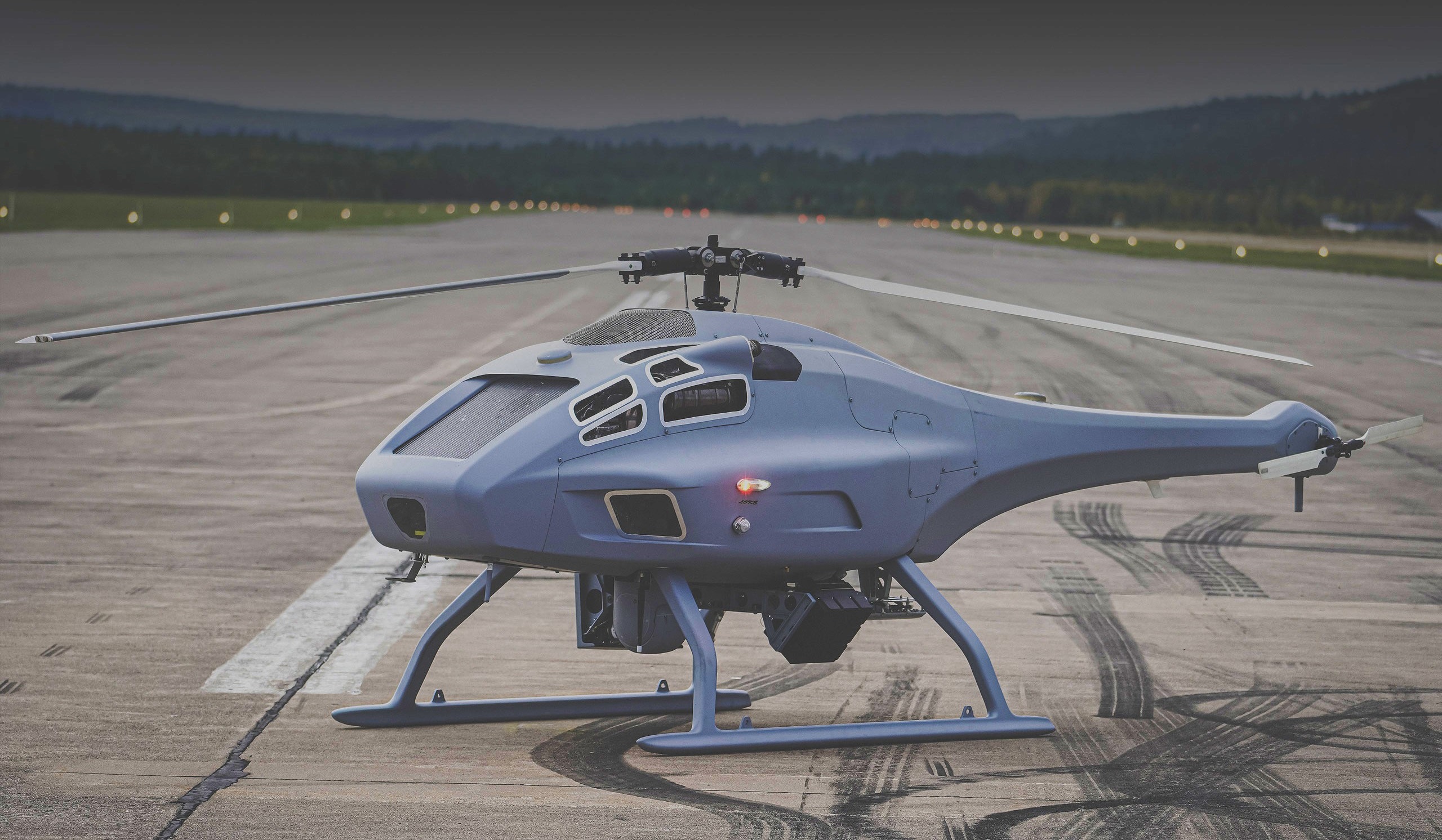
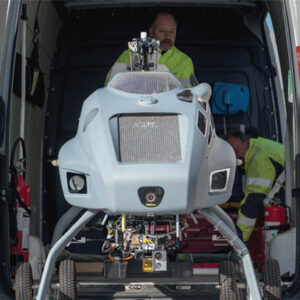
The SKELDAR V-200 is a multi-purpose unmanned VTOL system trusted by naval forces worldwide, designed for Intelligence, Surveillance, and Reconnaissance (ISR), naval operations, and border monitoring missions. It is optimized for ship-based and expeditionary deployments, offering extended endurance and modular payload flexibility for multi-domain operations.
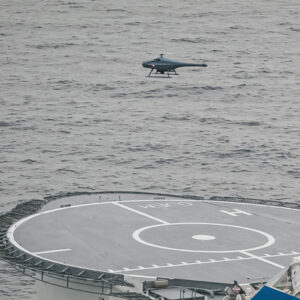
The system is engineered for operation in harsh maritime environments, including adverse weather and saltwater exposure, and supports ship-based Automatic Take-Off and Landing (ATOL) on moving vessels under challenging sea states. Its compact, modular architecture enables efficient transport, storage, and rapid payload reconfiguration for mission adaptability.
The V-200 supports a wide range of mission profiles, including border protection, naval surveillance, anti-submarine warfare (ASW), and real-time maritime threat detection through advanced sensor integration such as EO/IR, SAR, LiDAR, and SIGINT payloads. It enables over-the-horizon situational awareness and improves operational safety by allowing stand-off sensing and reduced risk exposure.
Capabilities
Border Protection
Remote and difficult-to-access borders present authorities with challenging surveillance scenarios. Six-hour flight times and numerous payload combination options make the V-200 an invaluable asset for coastal and overland border monitoring operations.
Naval Surveillance
Class-leading endurance enables the V-200 to maintain an Over the Horizon (OTH) vantage point for extensive periods, providing the host ship crew with the necessary information to stay one step ahead of evolving seaborne threats. Equipped with the appropriate Signals Intelligence (SIGINT) gathering payload, the V-200 can be used to intercept signals and provide geodetic positioning information of seaborne threats in high-risk scenarios.
Anti Submarine Warfare (ASW)
Capable of supporting wide-area ASW and countermine operations, the V-200 becomes an excellent extended endurance airborne tool for classifying, locating, and tracking submersible threats when equipped with suitable maritime sensors. An ASW-equipped V-200 allows an operation to take place at a safer stand-off range, reducing the risk to personnel and the host vessel itself.
Improving Ship Detection Range in Real-Time
Capable of simultaneously tracking multiple targets in real-time when equipped with EO/IR and SAR sensor combinations, the V-200 improves ship detectability range and surveillance capabilities, enabling dynamic detection of illegal activities such as piracy, narco-trafficking, and illegal migration, increasing maritime asset safety and security.
System Introduction
Rugged components designed to operate in adverse weather and harsh saltwater conditions, ship-based Automatic Take-off and Landing (ATOL), ship-specific Remote Pilot Station (RPS) integration options, multiple payload carrying capability, and a dependable heavy fuel engine are just some of the features that make the V-200 the ultimate NATO-aligned rotary platform.
Technical specifications
| Category | Specification |
|---|---|
| Vehicle Type | Unmanned Aerial System (UAV / UAS), VTOL helicopter |
| Payload Capacity | Multiple payloads up to 40 kg (88 lbs) |
| Maximum Take-Off Weight (MTOW) | 245 kg (540 lbs) |
| Data Link Range | 100 km+ (54 NM) |
| Service Ceiling | 3000 m (9842 ft) |
| Maximum Airspeed | 140 km/h (75 kts) |
| Endurance | 6+ hours (varies with payload configuration) |
| Fuel Type | Heavy Fuel (Jet A-1, JP-5, JP-8) |
| Rotor Diameter | 4.60 m (15 ft) |
| Airframe Length | 4 m (13 ft) |
| Height | 1.3 m (4.2 ft) |
| Width | 1.2 m (4 ft) |
Key Features
System Redundancy
From the start, redundancy has been engineered into every aspect of the system. Features such as redundant power and fuel systems, a dual-core FCU, and strong datalinks enable the V-200 to remain airborne should an emergency occur.
Industry-Leading Heavy Fuel Engine
Designed to operate on kerosene-based Jet A-1, JP-5, and JP-8 fuels, the V-200’s Hirth direct-injected parallel-twin two-stroke engine sets the benchmark for efficiency and reliability, with high-grade components extending Time Between Overhauls (TBO).
Training & Simulation
UMS SKELDAR is an approved training organization offering conversion courses, including multi-day ISR training programs led by experienced professionals with frontline expertise.
Ship-Based ATOL System
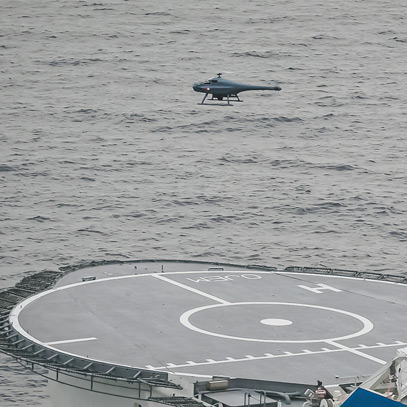
Ship-based Automatic Take-off and Landing enables operations on dynamic surfaces such as pitching and rolling ship helidecks. Independent positioning assistance allows landing in up to 25-knot winds (NATO Sea State 3–4), as well as in reduced visibility conditions such as nighttime, fog, and heavy rain.
Efficient Maintenance & Storage
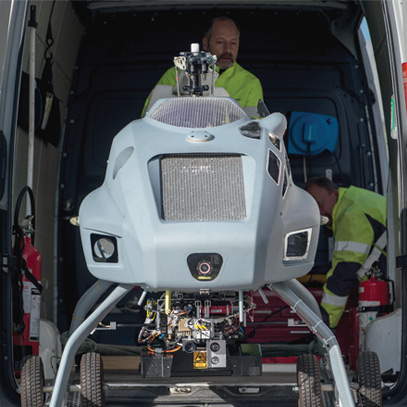
The compact design minimizes space requirements for transport and storage. Modular design and removable access panels support efficient maintenance, inspections, and payload reconfiguration.
Payload Flexibility
A forward position designed for optical sensors, a central position for tactical Multi-INT and SAR payloads, and long-range data link capability (100 km+) enable flexible mission configurations.
Payload Options
As an open-architecture platform, the V-200 supports multiple sensor combinations and role changes.
Supported payloads include EO/IR sensors, SAR, LiDAR, and Electronic Warfare (EW) systems such as COMINT, RADINT, and GPR.
Connectivity, Control & Integration
NATO Compliant & Certified
Fully AQAP-2110 certified and compliant with multiple NATO STANAG standards, enabling interoperability with NATO and defense systems.
Mission Automation
Point-and-Fly, Point-and-See, and Vectoring functions reduce operator workload and improve mission focus.
Reliable Data Link
High-bandwidth phased array antennas ensure stable communication links without moving parts.
Ship Integration
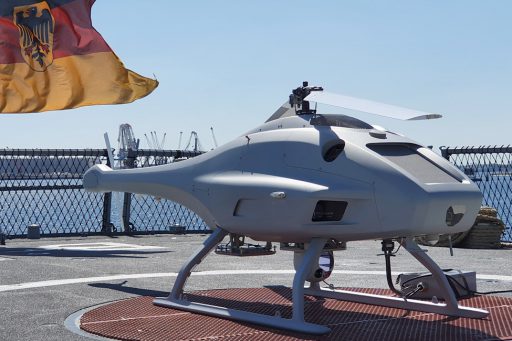
Supports integration with frigates, carriers, and patrol ships via ship-specific Remote Pilot Stations.
C4ISR & BMS Integration
Integrates with Battle Management Systems (BMS) and Command, Control, Communications, Computers, Intelligence, Surveillance and Reconnaissance (C4ISR) systems for enhanced situational awareness.