

Q-Boat 1250
Product descripton: Q-Boat 1250 by Teledyne Marine
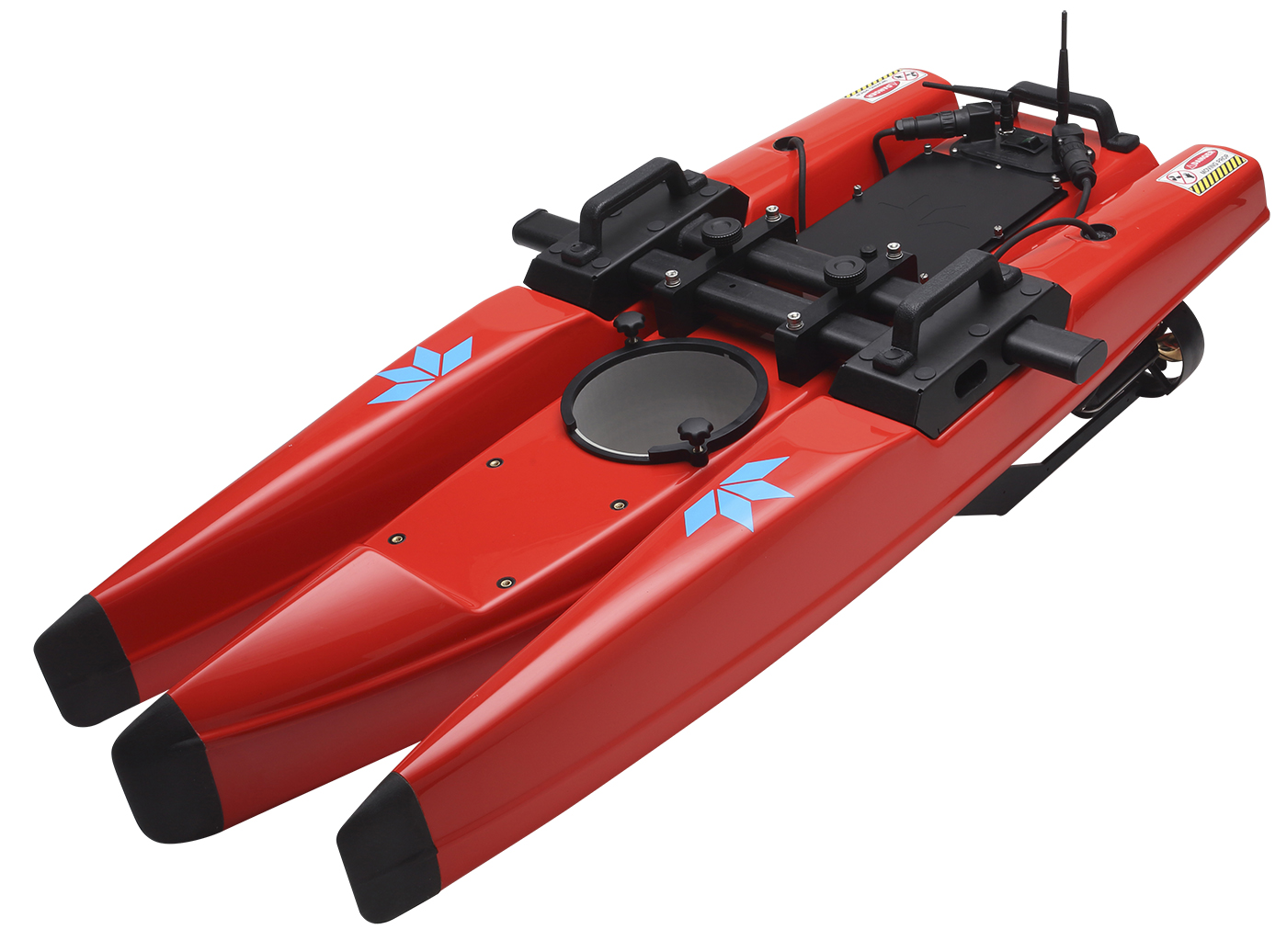
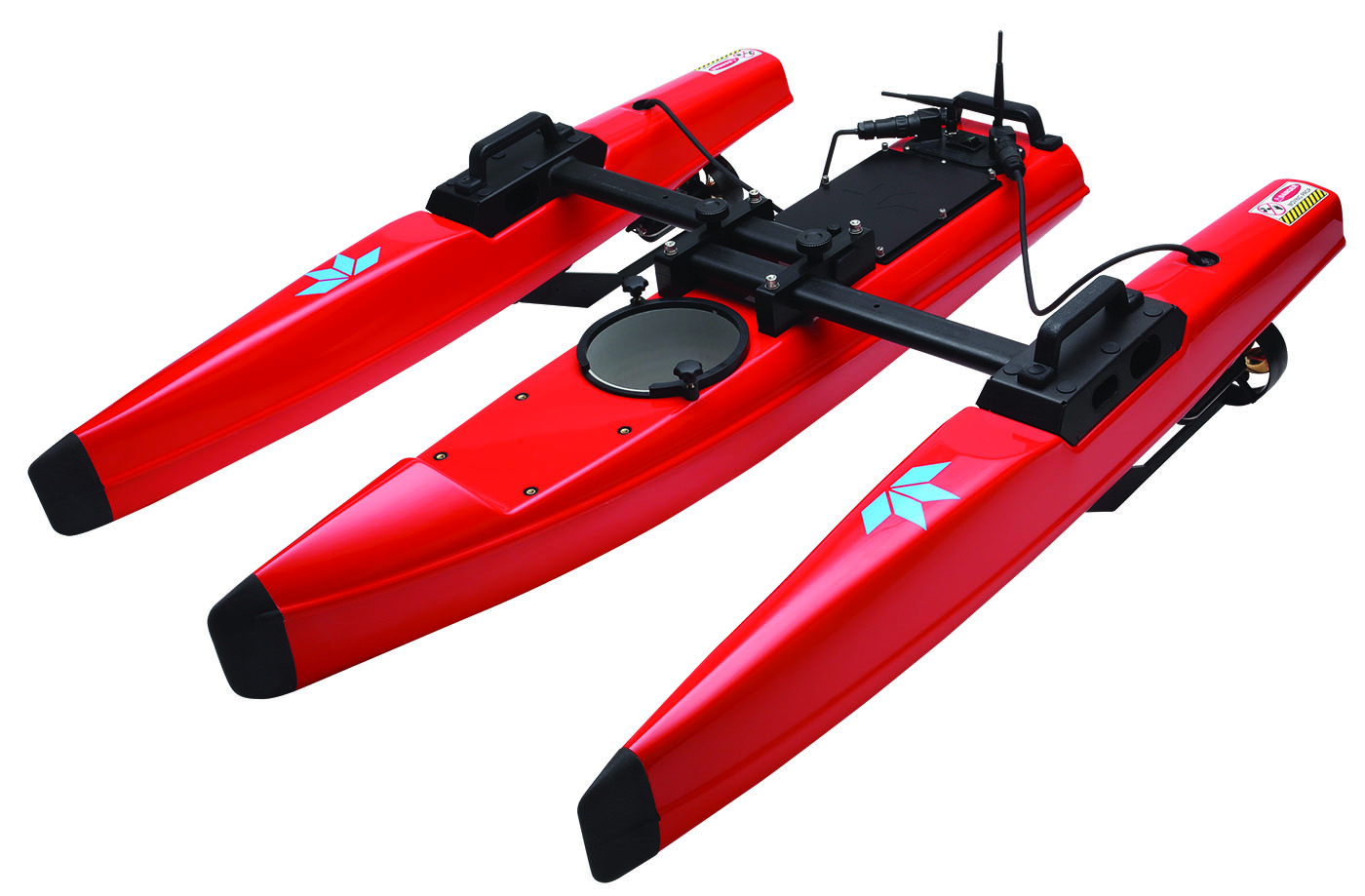
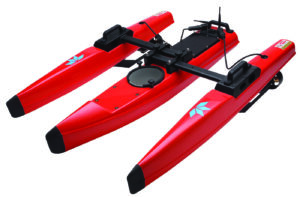
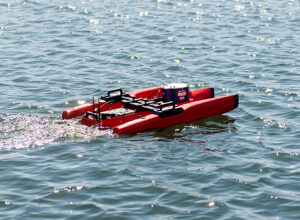
The Teledyne Oceanscience Q-Boat 1250 is a compact remotely operated surface vehicle (USV) designed for portable and efficient hydrographic surveys using Acoustic Doppler Current Profilers (ADCPs). Built for shallow-water applications, the system enables single-person deployment and operation, providing a safe and cost-effective alternative to traditional survey methods.
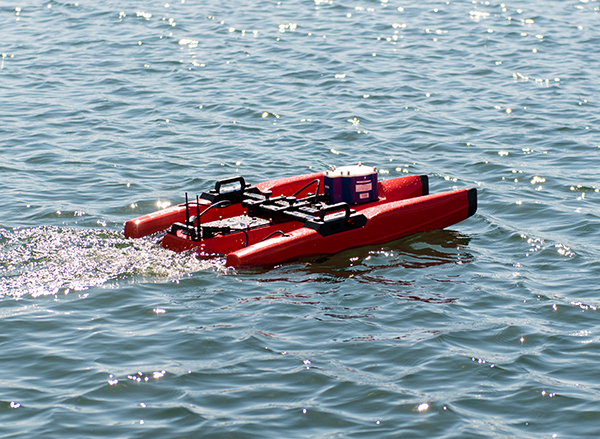
Featuring a robust dual-thruster propulsion system, the Q-Boat 1250 delivers stable and repeatable survey performance in streams, rivers, lakes, and protected coastal areas. Its lightweight and portable design allows operators to access remote or difficult-to-reach locations while reducing deployment time and improving personnel safety by keeping survey teams away from hazardous water conditions.
The Q-Boat 1250 supports most industry-standard ADCP systems and provides wireless sensor data transmission, enabling efficient current measurements and high-quality hydrographic data collection. Its modular and convenient design makes it suitable for rapid deployment in a wide range of inland and nearshore survey operations.
Key Applications
- ADCP measurements in rivers and streams
- Shallow-water hydrographic surveys
- Current profiling in lakes and coastal areas
- Remote and difficult-access survey locations
Technical specifications
| Parameter | Specification |
|---|---|
| Vehicle Type | Remotely operated surface vehicle (USV) |
| Primary Function | Hydrographic measurements with ADCP sensors |
| Deployment | Single-person deployment and operation |
| Propulsion System | Dual-thruster propulsion system |
| Maximum Speed | 2.3 m/s (7.5 fps) |
| Cruising Speed | 1.8–2.0 m/s |
| Operating Time | Approximately 2.5 hours at 2 knots |
| Wireless Bluetooth Range | 300 m |
| Wireless Radio Transmit Range | 1,200 m |
| Sensor Data Transfer | Wireless multiplexed data transmission from Q-Boat to shore |
| Recommended Environment | Streams, slow-moving rivers, lakes, and protected coastal waters |
| Sensor Compatibility | Most industry-standard ADCP systems |
| Deployment Advantage | Portable design suitable for remote locations |